
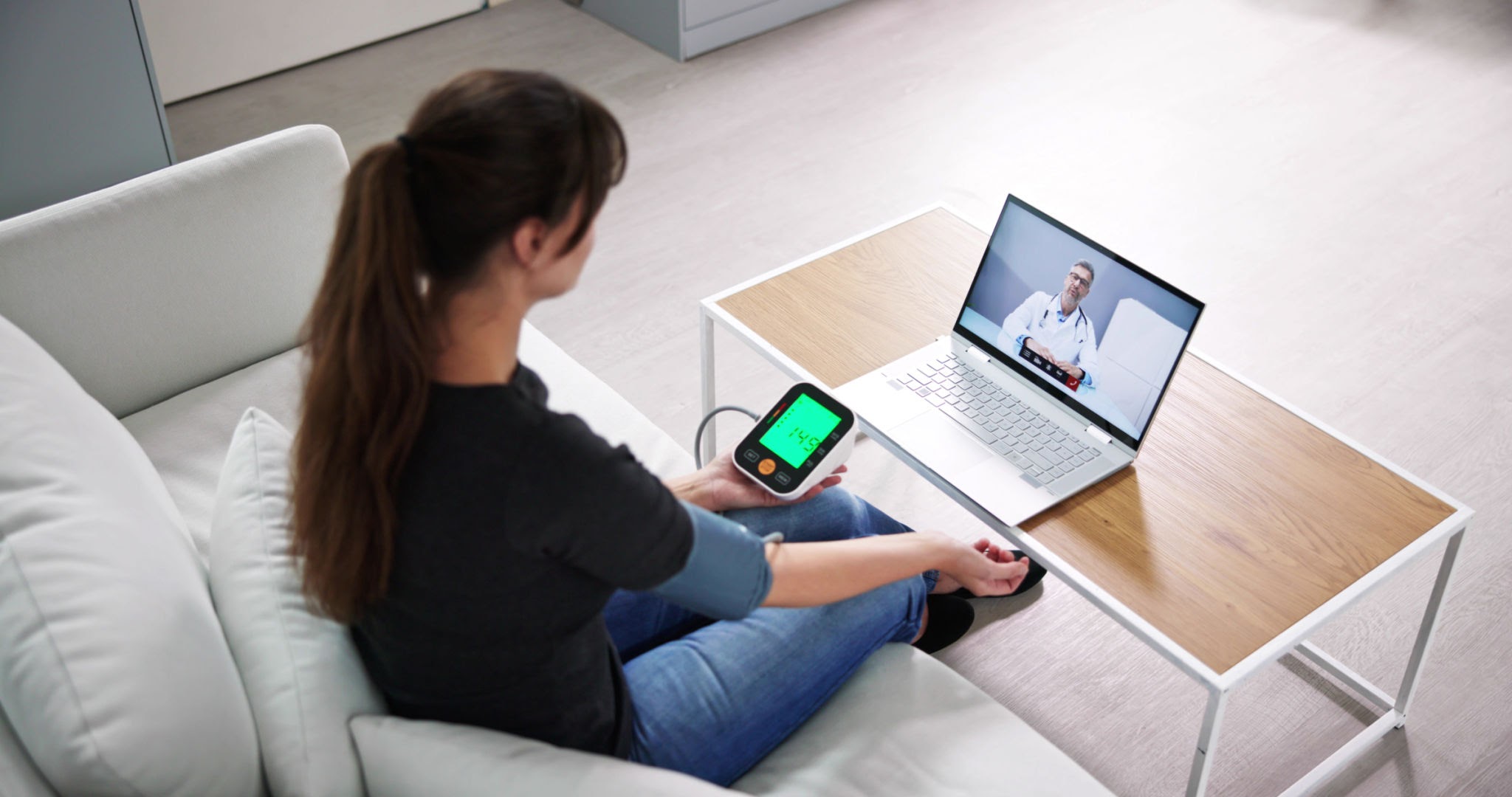
Remote Patient Monitoring (RPM) has evolved far beyond a peripheral virtual care experiment.
With over 71 million Americans enrolled in remote physiologic monitoring programs, the U.S. market is on pace to exceed $29 billion.
In landmark clinical trials evaluating pharmacist-managed home blood pressure telemonitoring, structured programs achieved a 71.2% blood pressure control rate compared to just 45.2% in usual care (JAMA, PMID: 23821088).
However, as practice adoption accelerates and Medicare claim volumes hit record highs, federal regulators have shifted their focus from expanding access to aggressive billing enforcement.
If your practice relies on external software vendors, outsourced call centers, or legacy time-tracking templates, your recurring RPM revenue may be sitting on a compliance fault line.
Under current Centers for Medicare & Medicaid Services (CMS) enforcement priorities, Medicare auditors and federal investigators are actively targeting remote care claims—clawing back payments for unbundled services, poor documentation, and vendor-driven billing shortcuts.
Protecting your organization requires recognizing where RPM billing vulnerabilities hide and establishing an audit-proof clinical workflow.
OIG Medicare RPM Audits: Why Federal Regulators Are Target Remote Claims
Federal oversight of remote care reached a turning point following a landmark report from the Department of Health and Human Services Office of Inspector General (HHS-OIG Report OEI-05-22-00180).
The report revealed widespread systemic gaps in Medicare Part B RPM billing:
-
43% Missing Component Rate: Nearly half of all audited Medicare RPM enrollees did not receive all three required service elements—initial setup/education, medical device data transmission, and interactive clinical treatment management.
-
Missing Provider Orders: Over 40% of enrollees lacked documented, verifiable orders from a treating physician or qualified healthcare professional in their medical record.
-
Unbundled Claim Submissions: Federal auditors identified thousands of instances where practices billed setup fees (CPT 99453) or monthly device supply (CPT 99454) without ever delivering the mandatory monthly clinical management time (CPT 99457).
When a Medicare Administrative Contractor (MAC) auditor identifies these discrepancies during a post-payment review, the verdict is straightforward: the entire RPM care bundle is deemed invalid.
Medicare demands a full refund for every code submitted for that patient across their entire enrollment history, accompanied by potential civil monetary penalties under the False Claims Act.
Avoiding “Phantom” Readings: 4 Vendor Shortcuts That Trigger MAC Audits
Many healthcare practices do not set out to misreport Medicare claims.
Instead, they fall victim to dangerous shortcuts embedded in commercial RPM software or promoted by non-clinical device vendors:
-
Automated “Phantom” Ping Logs: To capture monthly device supply reimbursement (CPT 99454 or the short-threshold CPT 99445), system algorithms must record valid physiological data transmissions.
Some non-compliant vendors configure software to log automated system pings, battery status checks, or scheduled software updates as “patient readings.”
CMS explicitly defines counting system pings as physiologic data as fraudulent billing.
-
Duplicate & Multi-Vendor Device Claims: Medicare rules prohibit billing multiple RPM device supply codes for the same beneficiary within the same 30-day window.
If a patient receives a cellular blood pressure cuff from a primary care clinic and a digital weight scale from a cardiology group, only one practice can bill for device supply.
-
Unbundled “Device-Only” Billing: A frequent vendor misstep is encouraging practices to bill monthly device codes (CPT 99454/99445) as standalone passive revenue without conducting interactive care management.
Billing for medical device transmission month after month without documenting clinical review or patient interaction signals an immediate red flag to MAC data-mining algorithms.
-
Unverified Verbal Consent Records: Every RPM enrollment requires documented patient consent secured before services begin.
Relying on un-timestamped checkboxes in an EHR chart or informal verbal notes fails under audit scrutiny.
Auditors demand precise records documenting that the patient was informed of program rules, standard Part B co-insurance obligations, and their right to revoke participation.
Why Software Alone Fails Compliance
The disconnect in most RPM programs stems from relying on passive software platforms or automated device shipping companies.
Software can log a data transmission, but it cannot exercise clinical judgment, conduct interactive management, or resolve therapy risks.
To achieve an audit-proof workflow, healthcare executives must treat their RPM platform like an aviation “Flight Recorder.”
Just as a flight recorder logs immutable data, altitude, airspeed, engine telemetry, and voice records—a compliant RPM platform must automatically capture:
-
The exact timestamp and raw biometric payload transmitted from an FDA-cleared connected device.
-
The precise minutes spent by clinical staff analyzing physiologic data trends.
-
Time-stamped audio/video logs of real-time interactive communications with the patient.
-
Automated write-backs directly into your native EHR to prevent retroactive documentation edits.
The Missing Link: Clinical Pharmacist Oversight
Software records the data, but licensed clinical pharmacists give that data clinical meaning under general physician supervision.
Operating at the top of their license, virtual clinical pharmacists validate biometric trends, triage hypertensive or glycemic spikes, reconcile medication regimens, and document compliant, time-stamped care management notes directly into the native EHR.
This eliminates the gap between device transmission (CPT 99454) and interactive clinical care (CPT 99457).
Real-World Impact: Managing Acute Hypertensive Spikes
The clinical and regulatory value of combining automated telemetry with pharmacist-led intervention is illustrated in complex chronic care management:
Ms. B* was enrolled in Remote Patient Monitoring (RPM) due to severe, labile blood pressure readings and acute hypertensive spikes that caused intense anxiety and nocturnal tremors.
During routine telemetry review, her Pharmacist Care Manager (PCM) identified Ms. B.* was self-administering PRN clonidine during panic episodes, which exacerbated her blood pressure instability.
Furthermore, Ms. B.* had previously discontinued her prescribed transdermal clonidine patch due to severe skin contact dermatitis from a specific manufacturer brand (Mylan), leaving her without long-acting blood pressure control.
The PCM educated Ms. B.* on skin protection techniques, identified alternative patch manufacturers that do not cause skin irritation, and reassured her regarding blood pressure stability.
The PCM documented the encounter, coordinated with her cardiologist at South Denver Cardiology to safely restart clonidine patch therapy, and updated the care plan in her native EHR.
*Patient details and names have been anonymized to protect privacy in compliance with HIPAA guidelines.
CY 2026 Reimbursement Framework: CPT 99445 and CPT 99470 Rules
Capitalizing on your RPM program requires understanding the expanded coding tiers finalized under the CMS Medicare Physician Fee Schedule.
The 2026 framework introduces flexibility for shorter monitoring windows (CPT 99445) and lower care management time tiers (CPT 99470):
| CPT Code | Service Description | Minimum Threshold Required | 2026 Medicare National Average | Mandatory Billing Prerequisites |
|---|---|---|---|---|
| CPT 99453 | Initial setup & patient education | One-time per episode of care | ~$22 | Must document initial device calibration and time-stamped patient consent. |
| CPT 99445 | Short-threshold device supply | 2–15 days of data / 30 days | ~$52 | FDA-cleared device; captures short post-acute care or lower-engagement months. Cannot bill with 99454. |
| CPT 99454 | Full-threshold device supply | 16–30 days of data / 30 days | ~$52 | FDA-cleared device with automated data transmission. Cannot bill with 99445. |
| CPT 99470 | First-tier care management time | 10–19 minutes / calendar month | ~$26 | Requires clinical staff time + at least one live interactive communication. Cannot bill with 99457. |
| CPT 99457 | Full care management time | 20 minutes / calendar month | ~$52 | Requires 20+ cumulative mins of clinical staff time + live interactive touchpoint. |
| CPT 99458 | Additional care management time | Each additional 20 minutes | ~$41 | Add-on code to 99457; requires detailed, cumulative clinical time logs. |
Note: Rates reflect CY 2026 CMS PFS Non-Facility national unadjusted averages calculated using the $33.40 conversion factor. Actual practice reimbursement varies based on local Geographic Practice Cost Indices (GPCI).
Action Plan for Healthcare Leaders: 4 Steps to Secure Revenue
To protect your organization from CMS recoupments while maximizing remote care ROI, executive leaders should take four immediate steps:
-
Audit Existing RPM Billing Records: Review your last 12 months of RPM claims to confirm every billed CPT 99454 code has a corresponding physician order, valid consent timestamp, and CPT 99457 care management log.
-
Eliminate Vendor “Phantom” Pings: Verify that your technology vendor’s software excludes automated pings, system updates, and non-physiologic status pings from data transmission counts.
-
Align Workflows with 2026 Code Tiers: Train clinical staff to utilize CPT 99445 for lower-engagement months (2–15 days) and CPT 99470 for brief 10-minute clinical interventions.
-
Partner with a Clinically Driven Vendor: Transition away from passive device distributors toward a pharmacist-led clinical partner that guarantees full-spectrum care delivery across Chronic Care Management (CCM), Transitional Care Management (TCM), and Medication Therapy Management (MTM).
Safeguard Your Practice Revenue for 2026
Remote Patient Monitoring offers immense clinical value and predictable practice growth.
However, scaling a program on loose vendor workflows or automated software pings exposes your practice to severe financial liabilities.
By integrating clinical pharmacist oversight and automated EHR audit trails into your workflow, your clinic can deliver high-impact remote care with total regulatory compliance.
Contact PharmD Live® today to schedule your RPM Billing & Compliance Audit.
References
-
Centers for Medicare & Medicaid Services (CMS). Calendar Year (CY) 2026 Medicare Physician Fee Schedule Final Rule. CMS.gov.
-
U.S. Department of Health and Human Services, Office of Inspector General (HHS-OIG). Additional Oversight of Remote Patient Monitoring in Medicare Is Needed (Report No. OEI-05-22-00180). HHS OIG.
-
American Medical Association (AMA). CPT® 2026 Professional Edition: Remote Physiological Monitoring Guidelines. AMA Publishing.
-
Centers for Medicare & Medicaid Services (CMS). Medicare Learning Network (MLN) Telehealth & Remote Patient Monitoring Booklet. CMS MLN.
-
Margolis KL, Asche SE, et al. Effect of Home Blood Pressure Telemonitoring and Pharmacist Management on Blood Pressure Control: A Cluster Randomized Clinical Trial. JAMA. 2013;310(1):46-56. PMID: 23821088.
-
PharmD Live®. Remote Patient Monitoring Solutions & Compliance Integrity. PharmD Live.

