

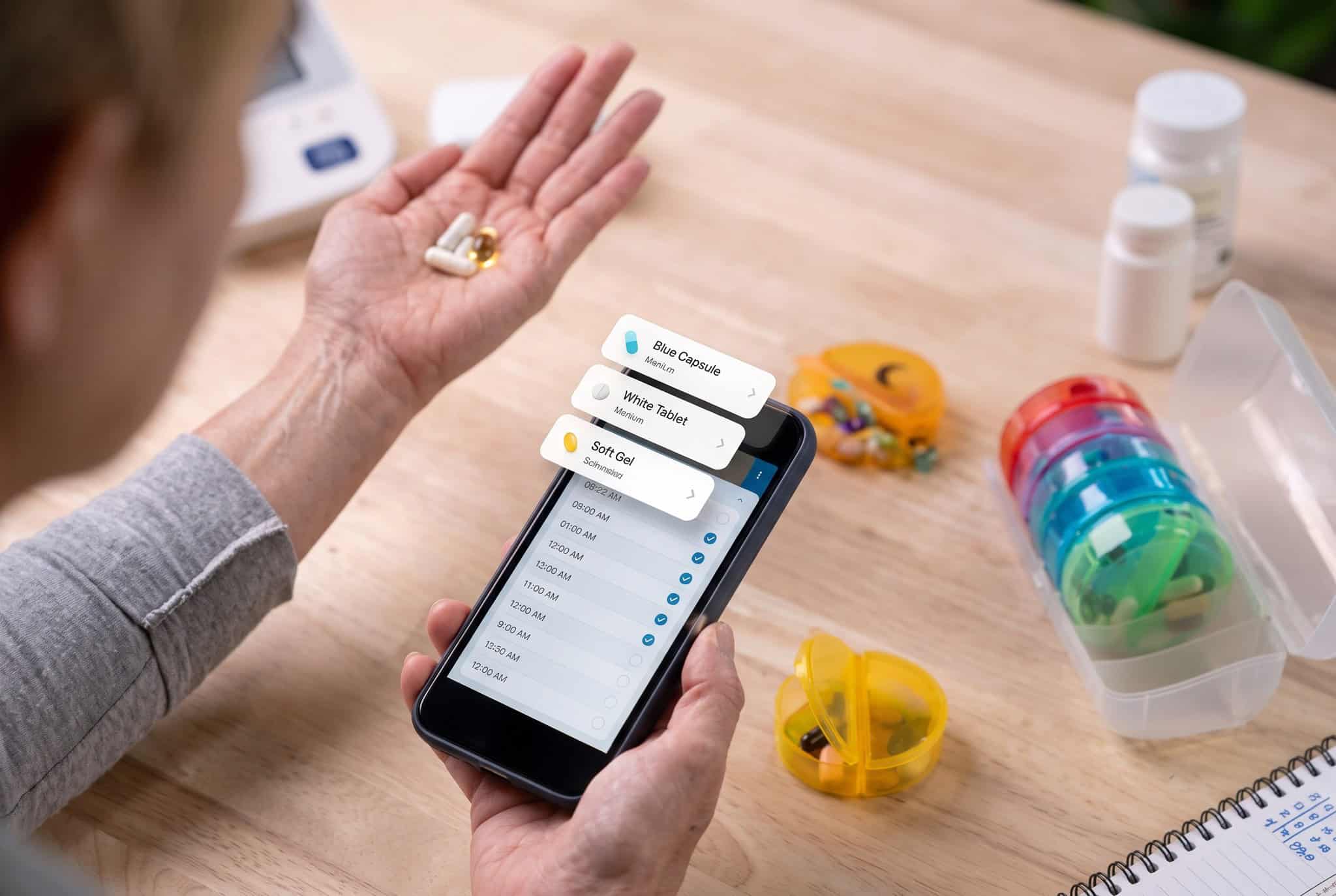
Digital tools are becoming part of how patients manage prescription medicines. Medication reminder apps can help people keep track of doses, while other tools provide medication information, symptom tracking, or support for managing chronic conditions.
Yet an essential clinical question remains: What happens when a patient is confused about a titration, experiences an adverse reaction, or continues taking a discontinued medication because their app schedule is out of date?
A software application may bring a red flag to a patient's attention. But it cannot necessarily determine the clinical root cause, modify therapy, or coordinate with the treating physician.
For healthcare leaders, physician practices, and value-based care organizations, this highlights a critical operational vulnerability:
When a medication-related concern comes to light, does your organization have a clinical workflow to investigate, assess, intervene, and confirm follow-through?
The U.S. Food and Drug Administration's (FDA) October 2026 final guidance on prescription drug use-related software provides important regulatory context for certain prescription drug-related software.
It also brings attention to a broader operational issue: how healthcare organizations connect digital medication support with clinical care.
Understanding the guidance is the starting point. Building a process that helps patients when medication problems arise is the next step.
Evaluating the FDA’s 2026 Prescription Drug Software Guidance
On October 20, 2026, the FDA issued its final guidance, Regulatory Considerations for Prescription Drug Use-Related Software (PDURS).
The guidance explains how the FDA applies its drug-labeling authorities to certain software outputs distributed by or on behalf of a prescription drug sponsor.
It generally covers software that provides information to patients, caregivers, or healthcare professionals that supplements, explains, or is otherwise textually related to one or more of the sponsor's prescription drug products.
Crucially, the FDA distinguishes between two types of software functions:
Device-connected functions:
Receive data transferred directly from an integrated medical device (such as a connected smart inhaler or auto-injector).
Because hardware telemetry directly affects drug delivery, the FDA generally recommends describing these functions in the drug’s official Prescribing Information (PI).
Standalone functions:
Depend on manual user entries (such as dose logs, side effect diaries, and lifestyle coaching).
The FDA generally recommends excluding standalone functions from prescribing information unless the sponsor submits evidence demonstrating the software is essential to safe/effective use or achieves meaningful clinical improvements.
What does this mean for healthcare organizations?
The guidance is directed primarily at drug sponsors and manufacturers. It does not create a new general compliance requirement for physician practices, health systems, or value-based care organizations.
However, it offers healthcare organizations an understanding of the tools they evaluate and use: what information a tool provides, what it is designed to do, and where its limitations lie.
That understanding can help organizations decide how digital medication support fits into their existing care processes.
Read the FDA's final guidance on prescription drug use-related software and the Federal Register notice.
The Information Blindspot: What Medication-Related Digital Tools Capture
Medication-related apps and digital tools serve different purposes.
Some provide dose reminders or medication information. Others allow patients to record symptoms, track medication use, or share information about their experience with treatment.
What a tool can reveal depends on what it is designed to collect and whether anyone on the care team can access that information.
A reminder app, for example, may display a medication schedule without knowing whether the patient has followed it. A symptom tracker may record a concern, but it cannot independently determine what caused it.
In practice, medication-related concerns may reach healthcare professionals in different ways:
- Through digital information: A patient records symptoms, missed doses, or difficulty following a medication schedule in a tool that supports those functions.
- Through patient reports: During an appointment or follow-up, a patient explains that they are skipping doses, experiencing possible side effects, or struggling to understand their instructions.
- Through medication reviews: A pharmacist or another healthcare professional identifies discrepancies, duplicate therapies, or outdated instructions when reviewing the patient's medication information.
These sources may bring several types of concerns to light:
- Medication use: Is the patient taking the medicine as prescribed, or are there difficulties with the schedule?
- Understanding instructions: Does the patient know how much to take, when to take it, and what the medicine is for?
- Possible side effects: Has the patient reported a symptom that needs further clinical assessment?
- Changes to treatment: Does the medication list reflect the latest instructions, particularly after a hospital stay or change in care?
- Access to medicines: Is the patient able to obtain and afford the prescribed treatment?
These concerns do not all require the same response.
A patient who misunderstands a dosing instruction may need clarification, while a possible adverse reaction may require prompt clinical assessment. A patient who cannot afford a prescription may need help exploring access options.
Information can bring a medication concern to attention, but it does not solve the underlying clinical problem. That requires clinical assessment and a clear process for translating that signal into safer care

From Digital Medication Signals to Clinical Action: Building a Reliable Care Process
Healthcare organizations need a defined process for responding when medication-related concerns emerge.
A practical workflow can be organized into five stages.
1. Identify the Concern
A medication-related concern may come from a digital tool, a patient's report, a medication reconciliation, a routine clinical encounter, or a post-discharge follow-up.
The organization should establish how concerns enter the care process. This includes considering whether information is transmitted directly to the clinical team or whether patients need to share it during an encounter.
Not every app sends information to a healthcare professional.
2. Assess the Medication Problem
Once a concern is identified, an appropriately qualified healthcare professional needs to determine what it means for the patient.
This may involve reviewing the current medication list, comparing prescription instructions with what the patient is actually taking, checking relevant clinical information, and asking questions about the patient's experience.
The assessment should also consider urgency. A concern involving a potentially serious reaction may require a different response from a patient who needs help understanding a routine dosing schedule.
A clinical pharmacist can perform a medication-related assessment, while the treating prescriber remains involved when a treatment decision or clarification within the prescriber's responsibility is needed.
3. Coordinate the Appropriate Intervention
The next step is to decide what action is needed and involve the appropriate people.
Depending on the concern, this may include:
- Explaining medication instructions to the patient.
- Reviewing whether a medication-related problem requires further clinical assessment.
- Coordinating with the dispensing pharmacy.
- Communicating recommendations or concerns to the prescriber.
- Helping address medication access or adherence barriers.
- Escalating urgent concerns through the organization's established clinical procedures.
The appropriate response depends on the patient's circumstances, the nature of the concern, and the professional responsibilities of the people involved.
4. Document the Assessment and Action
Documentation should capture the concern, the assessment, relevant findings, recommendations, communications with the patient or other professionals, and actions taken.
Where a recommendation is made to a prescriber, the record should also show whether it was communicated and what decision or response followed.
This creates continuity for other members of the care team and helps prevent the same issue from being repeatedly identified without resolution.
5. Follow Up and Closed-Loop Follow-Through
The process is not complete simply because someone made a recommendation or sent a message.
The organization should establish who is responsible for checking whether the agreed action occurred. Did the patient understand the revised instructions? Was the prescription clarified? Did the patient obtain the medication? Is further clinical review necessary?
Follow-up helps determine whether the original concern has been resolved or whether additional support is needed.
The five stages: identify, assess, intervene, document, and follow up, provide a practical way to connect medication-related information with clinical action.
The specific responsibilities may vary across organizations, but they should be clear.
When a Medication Change Creates a Care Gap
Consider a hypothetical patient with several chronic conditions who has recently been discharged from hospital. During the hospital stay, some medications were discontinued, others were adjusted, and a new prescription was added.
The patient uses a medication reminder app to keep track of daily doses.
However, the schedule in the app still reflects the medication routine they followed before hospitalization.
At home, the patient becomes uncertain about which instructions to follow and continues taking some medicines according to the old schedule.
The reminder app may help the patient keep track of the schedule it contains, but it cannot independently establish whether that schedule reflects the latest discharge instructions.
The concern comes to the attention of the care team during a post-discharge follow-up. A pharmacist reviews the discharge medication list, the patient's previous medication information, and what the patient reports actually taking.
The review identifies a discrepancy between the old schedule and the updated instructions.
The pharmacist clarifies the medication information and contacts the treating prescriber when further clarification or a treatment decision is needed.
Once the appropriate instructions have been confirmed, the care team helps the patient understand the updated schedule.
The discrepancy, assessment, communication, and agreed actions are documented. A follow-up is then arranged to confirm that the patient understands the instructions and has been able to follow the clarified regimen.
This example clearly illustrates why medication support requires more than reminders.
The technology may help a patient organize medication use, but a clinical professional still needs to investigate discrepancies, coordinate appropriate action, and confirm that the patient has received the support needed.

5 Practical Ways Healthcare Organizations Can Strengthen Their Medication Support Process
Health organizations do not need to rely on technology alone to improve medication support. They need reliable operational workflows connecting digital tools to clinical teams:
The following steps can help establish a more reliable process.
1. Establish a Medication-Related Escalation Process
Define how medication concerns reach the appropriate clinical professional.
The process should account for concerns identified through digital tools as well as those raised during appointments, medication reviews, and care transitions.
2. Assign Clear Responsibility for Each Stage
Organizations should determine who is responsible for receiving concerns, reviewing medication information, coordinating interventions, communicating with prescribers, and confirming follow-up.
For example, designated clinical staff may receive a patient-reported concern, while a pharmacist reviews the medication-related issue. The treating prescriber may be involved when a treatment decision is needed, and an assigned care team member may coordinate follow-up.
3. Reconcile Medication Information Before Acting
Medication information may come from several sources, including the patient's current medication list, pharmacy records, prescriber instructions, and hospital discharge documents.
These sources may not always agree.
Before acting on a reported concern, the care team should establish what the patient has been prescribed and what they are actually taking. This can help identify discontinued medications, duplicate therapies, and discrepancies between care settings.
4. Integrate Technology Into Existing Clinical Workflows
A medication app or digital platform should not operate as an isolated part of the patient's care.
Organizations evaluating these tools should consider how relevant information can be shared with the clinical team, how patient-reported concerns are documented, and how staff can identify issues that have already been addressed.
They should also consider patient consent, privacy, accessibility, and digital literacy.
Not every patient has a smartphone, reliable internet access, or the confidence to use an app. Patients should have practical alternatives for communicating medication concerns and receiving support.
5. Track Actionable Process Outcomes:
Useful process measures may include:
- The number of medication-related concerns received and reviewed.
- The proportion reviewed within the organization's defined timeframe.
- The proportion with a documented assessment and action plan.
- Whether recommendations were communicated to the appropriate professional.
- Whether agreed interventions received documented follow-up.
Organizations may also monitor relevant patient and clinical outcomes, such as medication adherence, medication safety indicators, disease-specific measures, or healthcare utilization where appropriate.
How Clinical Pharmacists Strengthen Digital Medication Support
Digital tools can help patients manage their medicines, but identifying a medication concern is only part of the process. Clinical pharmacists help connect that information to appropriate assessment, intervention, and follow-up.
Research supports the potential contribution of both digital tools and pharmacist-led care.
A 2025 systematic review and meta-analysis in the Journal of Medical Internet Research (JMIR) found improvements in medication adherence across studies of mobile apps for people with chronic conditions.
However, reminders and tracking features cannot resolve every reason a patient may struggle with a medication regimen.
Clinical pharmacists can address some of the issues that technology alone cannot. They review medication lists, identify discrepancies and potential safety concerns, assess adherence barriers, and work with prescribers to coordinate appropriate interventions.
A 2024 systematic review in BMJ Quality & Safety , examining 50 RCTs of pharmacist-led medication reviews, demonstrated that pharmacist-led medication reviews significantly improve clinical outcomes when incorporating collaborative prescriber communication and structured follow-up.
Similarly, a 2023 review in Exploratory Research in Clinical and Social Pharmacy covering 57 studies, found that these services may improve some clinical outcomes, although differences between studies made it difficult to identify which specific activities produced particular results.
There is also emerging evidence for combining digital support with pharmacist involvement.
In a 2025 randomized controlled trial published in npj Digital Medicine, 86 people with chronic kidney disease received either standard care or access to the Kidney Health app alongside monthly pharmacist follow-up.
The intervention group showed improved medication adherence and changes in some clinical measures.
The practical implication is that digital tools and clinical expertise can serve complementary roles.
Technology may support medication tracking and communication, while pharmacists help interpret concerns, assess medication-related problems, coordinate with prescribers, document interventions, and support follow-through.
This is the kind of support PharmD Live provides to physician practices, health systems, and value-based care organizations through its multidisciplinary care management services.
Its clinical pharmacist-led services include medication reconciliation, medication safety reviews, adherence support, and recommendations to prescribers.
PharmD Live also supports medication management across care transitions and helps address practical barriers involving medication access, affordability, and health literacy.
Explore PharmD Live's Care Management Solutions.
Better Medication Support Requires More Than Technology
The FDA's 2026 guidance provides important regulatory context for certain software associated with prescription drug products. However, understanding the guidance is only one part of the broader conversation.
Digital medication tools may help patients manage prescriptions and bring certain concerns to light.
But identifying a concern does not guarantee that it will be assessed, addressed, or followed through.
Health Organizations need a reliable process that connects that information with clinical assessment, appropriate intervention, documentation, and follow-up.
Pharmacists can play an important role in that process by helping identify medication-related problems, coordinate with prescribers, and support patients as they manage their treatment.
References
- U.S. Food and Drug Administration. Regulatory Considerations for Prescription Drug Use-Related Software: Final Guidance for Industry. October 2026. FDA final guidance.
- U.S. Food and Drug Administration. Regulatory Considerations for Prescription Drug Use-Related Software; Guidance for Industry; Availability. Federal Register. October 21, 2026;91 FR 66561–66563. Federal Register notice.
- Lanke V, Trimm K, Habib B, Tamblyn R. Evaluating the Effectiveness of Mobile Apps on Medication Adherence for Chronic Conditions: Systematic Review and Meta-Analysis. Journal of Medical Internet Research. 2025;27. doi:10.2196/60822.
- Craske ME, Hardeman W, Steel N, Twigg MJ. Components of pharmacist-led medication reviews and their relationship to outcomes: a systematic review and narrative synthesis. BMJ Quality & Safety. 2024;33(12):808–822. doi:10.1136/bmjqs-2024-017283.
- Costello J, Barras M, Foot H, Cottrell N. The impact of hospital-based post-discharge pharmacist medication review on patient clinical outcomes: A systematic review. Exploratory Research in Clinical and Social Pharmacy. 2023;11:100305. doi:10.1016/j.rcsop.2023.100305.
- Gamal S, Elseasi AMA, Sabry NA, Farid SF. Impact of pharmacist led mobile application on medication adherence and efficacy in chronic kidney disease. npj Digital Medicine. 2025;8:325. doi:10.1038/s41746-025-01742-8.
- PharmD Live. Care Management Solutions.


