
Remote patient monitoring (RPM) has a straightforward promise.
A patient collects health data at home using a connected medical device.
The device transmits that information to the healthcare team, which uses it to help manage the patient’s condition.
But as RPM utilization grows nationwide, Medicare is asking a critical question:
Are patients actually receiving the RPM services Medicare is paying for?
That question is driving unprecedented scrutiny from the Centers for Medicare & Medicaid Services (CMS) and the Department of Health and Human Services Office of Inspector General (HHS-OIG).
In a landmark evaluation report, the OIG revealed that approximately 43% of Medicare enrollees who received RPM services in 2022 did not have claims or encounter records for all three components:
In a 2024 evaluation of 2022 Medicare claims and encounter data, the OIG found that approximately 43% of Medicare enrollees who received RPM services did not have billed claims or encounter records for all three components initial setup/education, medical device data transmission, and active treatment management (HHS-OIG Report OEI-02-23-00260).
While OIG noted that Medicare did not require all three components to be billed for every patient (and missing claims do not by themselves prove services went undelivered), the data gap highlighted limited visibility into whether enrollees received the full scope of care.
As a result, regulatory bodies are calling for aggressive oversight, and tighter billing audits.
Furthermore, CMS proposed structural updates in the Physician Fee Schedule to incentivize bundled, integrated care management models.
For healthcare executives, the takeaway is clear:
Your RPM program needs to be more than operationally functional. It need to be able to demonstrate the service behind the claim.
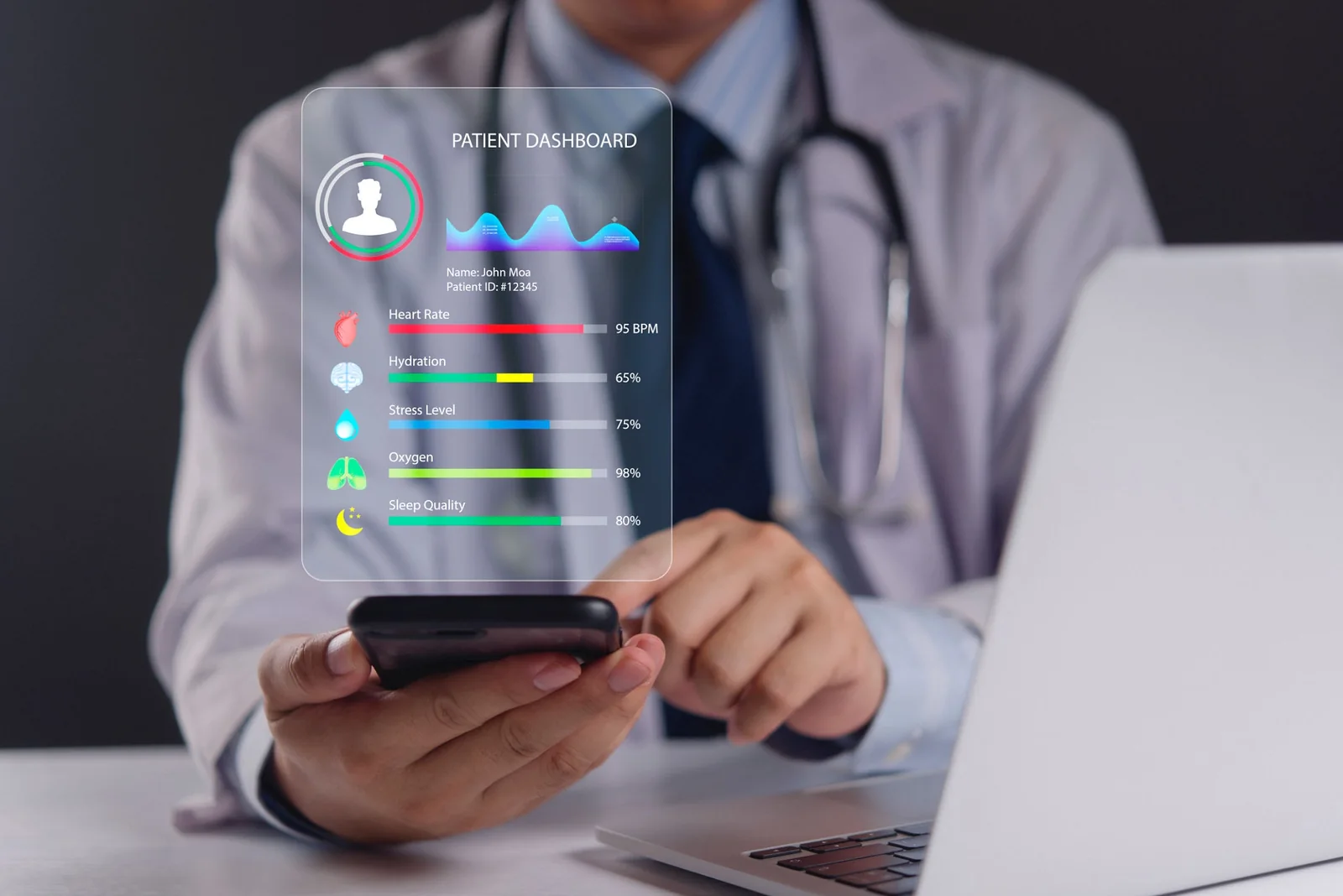
Moving beyond passive telemetry dashboards to active clinical care management. Source: hirun / Getty Images
Why RPM Billing Is Facing Greater Federal Scrutiny
In its 2025 report, Billing for Remote Patient Monitoring in Medicare, the OIG reported that Medicare payments for remote patient monitoring reached $536 million in 2024, a 31% increase from the previous year.
As RPM use and spending grow, OIG is examining whether the services being billed are supported by the available evidence, and whether Medicare has the information it needs to oversee them effectively.
Its 2025 analysis identified several billing patterns that warrant closer scrutiny:
- Unusually High Enrollment: One practice billed for nearly 3,400 new RPM enrollees in a single month.
- Limited Prior Patient Relationships: Forty-five practices had no prior medical relationship with more than 80% of the patients for whom they billed RPM in 2024.
- Treatment Management Gaps: For 52 practices, more than 75% of their enrollees had no treatment management billed during the year.
- Multiple Devices for the Same Patient: About 20 practices frequently billed for two or more monitoring devices per enrollee in a month, raising questions about potential duplicate billing or devices that were not provided or medically necessary.
These patterns point to a central question:
Does the billing tell the same story as the care the patient actually received?
But the concerns extend beyond billing patterns.
In its 2024 evaluation, Additional Oversight of Remote Patient Monitoring in Medicare Is Needed, OIG identified a significant information gap:
For approximately 44% of RPM enrollees, Medicare lacked information identifying who ordered the services.
This does not necessarily mean that those patients’ medical records lacked documented orders.
Rather, it showed that Medicare’s claims and encounter data did not provide the ordering-provider information OIG believed was needed for effective oversight.
Taken together, these findings highlight two related concerns:
- Whether the care being billed is actually being delivered, and
- Whether the available records and data give Medicare enough visibility to oversee that care.
For healthcare leaders, the practical question is clear:
Can your RPM workflows support the services you bill for?
The 3 Pillars of Compliant Remote Patient Monitoring
In order to answer whether your program could survive scrutiny, it helps to understand what CMS says the RPM service should consist of.
According to CMS guidance, RPM has three main components:
1. Education and Setup
The patient receives education on how to use the device and accurately collect the required health information.
2. Device Supply and Transmission
The patient uses a qualifying connected medical device that automatically collects and transmits health data to the healthcare provider.
Applicable data-collection requirements depend on the billing code and service being reported.
3. Treatment and Management
The provider reviews the transmitted health data and uses it to manage the patient’s condition.
For applicable treatment-management billing, CMS also specifies requirements for clinical time and interactive communication with the patient or caregiver.
Treatment management is what connects RPM data to clinical care.
Transmitted readings must be reviewed and used to guide appropriate care, with required treatment-management services and documentation in place to support billing.
The Operational Gap Between Data Collection and Active Management
Consider a patient whose home blood pressure readings remain elevated:
Day 1: 168/94 mmHg
Day 3: 172/96 mmHg
Day 5: 165/92 mmHg
The RPM platform flags the readings.
But the alert alone cannot explain what is happening or determine the appropriate response.
While these readings do not by themselves represent an emergency, a safe RPM workflow relies on an individualized escalation pathway established with the treating clinician:
- Routine Clinical Assessment: For persistent non-emergent elevations, the care team evaluates whether the patient is taking medications as prescribed, experiencing side effects or cost barriers, using interfering OTC products, or requiring regimen reassessment.
- Urgent & Emergency Escalation: If readings cross patient-specific urgent thresholds or exceed 180/120 mmHg alongside concerning symptoms such as chest pain, shortness of breath, back pain, numbness/weakness, or vision/speech changes (per American Heart Association guidance) staff follow defined escalation rules for immediate medical evaluation or calling 911.
- Authorized Therapy Adjustment: Medication recommendations are routed to the treating prescriber, or where permitted by state law and a formal Collaborative Practice Agreement (CPA) djusted by a clinical pharmacist within physician-approved parameters.
Research supports pairing home monitoring with structured pharmacist follow-up.
In a cluster-randomized clinical trial, Margolis and colleagues found that combining home blood pressure telemonitoring with pharmacist management improved blood pressure control compared with usual care in adults with uncontrolled hypertension.

Virtual clinical pharmacists conduct interactive outreach to address biometric spikes and support medication management in coordination with the treating clinician. Source: mikimad / Getty Images
Passing the Audit Test: An 8-Point RPM Compliance Checklist
Select a sample of patient files billed under RPM codes over the past 12 months.
For each file, check whether your team can substantiate the services billed.
- Clinical Rationale: Does the record establish the patient’s monitored condition and the clinical rationale for RPM?
- Time-Stamped Patient Consent: Is there documented proof that the patient was educated on program rules including applicable cost-sharing responsibilities?
- Device and Data Transmission: Was a qualifying connected medical device used, and can the required data collection and transmission be verified?
- Clinical Data Review: Is there documentation showing that transmitted readings were reviewed and used to manage the patient’s condition?
- Live Interactive Communication Log: Is there a dated record of the required real-time interactive communication with the patient or caregiver?
- Actionable Clinical Decision: When readings raised a concern, does the record show the assessment and appropriate response, whether that involved intervention, further monitoring, or escalation?
- Documentation and Traceability: Can your team readily retrieve the supporting records, time logs, clinical notes, and billing evidence, even when information is stored across multiple systems?
- Follow-Up: Where an intervention or escalation occurred, is there documentation of the follow-up needed to assess the patient’s response or determine the next step?
The test is simple:
Can you trace an RPM claim back to the care delivered and the documentation that supports it?
If a reviewer examined that claim today, could your team show the evidence?
CY 2027 Physician Fee Schedule: What CMS Finalized
On July 14, 2026, CMS issued the CY 2027 Medicare Physician Fee Schedule Proposed Rule (CMS-1848-P).
CMS has since finalized changes to remote monitoring, with different effective dates for initiating visits and clinical staffing.
Three proposals deserve particular attention:
- Direct Employment of Clinical Staff: CMS finalized a clinical-staff direct-employment requirement for RPM and RTM beginning January 1, 2029, rather than 2027.
- Mandatory Initiating Visit: Beginning in 2027, CMS requires a separately reportable initiating visit associated with the onset of RPM or RTM. The visit must be face-to-face, either in person or through telehealth.
- Potential Bundled HCPCS G-Codes: CMS is also seeking comment on creating new HCPCS codes for RPM and RTM. For RPM, the proposed codes are:
- GRPM1: RPM initial setup and patient education.
- GRPM2: Monthly RPM bundle requiring device supply, at least two days of data transmission, and at least 20 minutes of treatment management including a real-time interactive communication each month.
CMS explicitly connected this proposed restructuring to concerns raised in the OIG reports.
CMS sought comment on this bundled approach and may consider it in future rulemaking.
What Should an Effective RPM Program Look Like?
An effective RPM program should make the path from patient data to patient care clear.
The goal is to build a connected workflow in which the organization can answer three questions for any patient:
What did we see?
What did we do?
Where was it documented?
That is the standard healthcare leaders should use when evaluating an RPM program.
This is also where a model like PharmD Live may be relevant.
PharmD Live® describes a model that combines AI-driven monitoring software with virtual Pharmacist Care Managers to support remote monitoring, patient engagement, clinical review, and documentation within a connected care-management workflow.
Healthcare leaders should also examine how the RPM model is staffed, how clinical responsibilities are assigned, and how the arrangement would fit applicable billing rules, including any relevant requirements finalized from the CY 2027 proposal.
For organizations that also provide Chronic Care Management (CCM) and Transitional Care Management (TCM), it is worth examining whether responsibilities and documentation remain connected across services.
References
U.S. Department of Health and Human Services, Office of Inspector General (HHS-OIG). Additional Oversight of Remote Patient Monitoring in Medicare Is Needed. Report No. OEI-02-23-00260. Published September 2024.
U.S. Department of Health and Human Services, Office of Inspector General (HHS-OIG). Billing for Remote Patient Monitoring in Medicare. Report No. OEI-02-23-00261. Published 2025. HHS-OIG Official Report.
Centers for Medicare & Medicaid Services (CMS). Remote Patient Monitoring. CMS Medicare Coverage and Telehealth Guidance. Official CMS Guidance.
Centers for Medicare & Medicaid Services (CMS). Calendar Year (CY) 2027 Medicare Physician Fee Schedule Proposed Rule. CMS-1848-P. Issued July 14, 2026; published July 16, 2026. Official Proposed Rule.
Margolis KL, Asche SE, Bergdall AR, et al. Effect of home blood pressure telemonitoring and pharmacist management on blood pressure control: a cluster randomized clinical trial. JAMA. 2013;310(1):46-56. doi:10.1001/jama.2013.6549. PMID: 23821088.
Margolis KL, Asche SE, Dehmer SP, et al. Long-term outcomes of the effects of home blood pressure telemonitoring and pharmacist management on blood pressure among adults with uncontrolled hypertension: follow-up of a cluster randomized clinical trial. JAMA Netw Open. 2018;1(5). doi:10.1001/jamanetworkopen.2018.1617. PMID: 30646139.
Tenpas AS, Vascimini A, Westwood G, et al. Improvement in clinical outcomes and access to care with pharmacist-led chronic care management services at a rural family medicine clinic. J Pharm Pract. 2023;36(6):1392-1396. doi:10.1177/08971900221118232. PMID: 35938485.
PharmD Live®. Remote Patient Monitoring (RPM) Service. PharmD Live RPM Solution.
American Heart Association (AHA). When to Call 911 for High Blood Pressure. Heart.org.