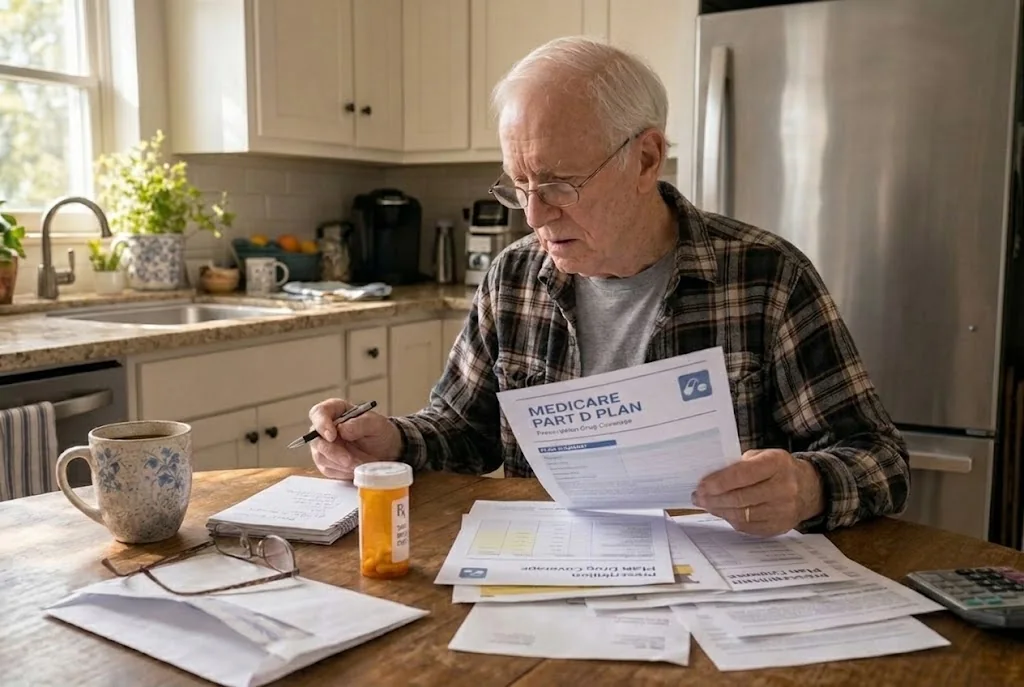


Rural healthcare funding can create opportunities to expand services. But funding alone does not determine which services a community needs, how they will fit into existing care teams, or whether they will deliver measurable results.
For rural hospital executives, health system leaders, and clinical program directors, the challenge is translating new resources into care that works for patients and the organizations serving them.
The federal Rural Health Transformation Program (RHTP) is moving from funding awards into implementation.
On October 9, 2026, the Centers for Medicare & Medicaid Services (CMS) and the Iowa Department of Health and Human Services highlighted Iowa’s formal obligation (legal commitment to contracts and subawards, distinct from actual funds expended to date) of its full first-year award of approximately $209 million under the state’s Healthy Hometowns initiative momentum reinforced on November 9, 2026, when CMS announced an additional $10 billion in Year 2 RHTP awards across all 50 states.
The investments span rural workforce development, expanded clinical services, maternal telehealth, cancer prevention, emergency medical services, and healthcare technology.
Iowa’s early progress illustrates how a state can translate funding into services and infrastructure.
But for rural healthcare leaders, the challenge is deciding which services can meet their communities’ needs, fit into existing care workflows, and deliver measurable results.
Pharmacist-led virtual medication management is one model worth evaluating, particularly where patients face barriers to medication access, complex treatment regimens, or limited access to medication-management services.
Whether such a model fits a particular RHTP-funded initiative depends on the state’s program requirements, the proposed arrangement, and the needs the service is intended to address.
Navigating State RHTP Rules: Moving from Grants to Clinical Execution
The Rural Health Transformation Program provides up to $50 billion to states over five years, covering fiscal years 2026 through 2030.
CMS administers the program, while states develop and implement their approved approaches to rural health transformation.
That distinction matters for organizations considering new services.
The existence of federal funding does not mean every rural provider, intervention, or outside vendor automatically qualifies for support.
Iowa’s Healthy Hometowns initiative offers one example of a state translating its plan into implementation.
Its initiatives include Hometown Connections, Communities of Care, cancer prevention and treatment, health information exchange, and EMS community care and mobile integrated health.
Iowa’s October 2026 update highlighted early progress, including equipment supporting 44 advanced procedures, 27 patients served through maternal telehealth, and health information exchange tools connecting more than 100 facilities.
These examples demonstrate the range of activities a state may pursue. They do not establish that a particular pharmacist-led service is eligible for funding or that it would produce the same results.
For organizations exploring a potential opportunity, the next step is to examine the relevant state’s approved plan and current funding documents.
Questions to investigate include:
- Does the state’s plan identify a need that the proposed service could address?
- What activities and expenses are permitted under the specific funding opportunity?
- Which organizations are eligible to apply or receive funding?
- Can an outside service provider participate as a contractor or partner, and under what conditions?
- What procurement, reporting, performance, and sustainability requirements apply?
- How would the proposed service fit into the state’s implementation timeline and existing care-delivery arrangements?
A service’s alignment with a state’s priorities is not proof of funding eligibility.
Nor does eligibility for a funding opportunity automatically establish that a particular vendor can contract with a recipient.
Organizations should verify these details against current state program documents and the specific funding opportunity before making financial or implementation commitments.
For current federal program information, consult CMS’s Rural Health Transformation Program resources.
For Iowa-specific initiatives, implementation updates, dashboards, and opportunities, visit Iowa HHS’s Healthy Hometowns page.

Overcoming Rural Health Obstacles: The Role of Virtual Pharmacist Care Managers
A patient’s chronic care needs do not end when a clinic appointment is over.
They may struggle to obtain a prescribed medicine, misunderstand how to take several medications, experience a potential medication-related problem, or need help coordinating treatment recommendations across multiple clinicians.
These challenges can be harder to address when specialist services are limited, travel is difficult, or follow-up appointments are infrequent.
Pharmacist-led virtual medication management can help extend medication-related support beyond the clinic.
Depending on the service model, pharmacists may review a patient’s medication regimen, identify medication-related problems, discuss barriers to taking medicines as prescribed, educate patients, and communicate recommendations to the prescribing clinician.
The objective is not to replace the patient’s existing care team. It is to help identify and address medication-related needs while keeping the appropriate clinicians involved in treatment decisions.
Research offers preliminary support for exploring this approach in rural settings.
A 2023 conference abstract in Rural and Remote Health (Curran et al.) reported preliminary first-three-month data from an exploratory, single-arm pre-post pilot of remote pharmacist-led comprehensive medication management across seven rural primary care clinics in North Carolina and Arkansas:
- Medication-Related Problem (MRP) Resolution: Across two participating clinical pharmacists, 88% (191 of 217) of identified MRPs were resolved during the initial three-month observation window.
- Glycemic Observations: Participating patients with uncontrolled diabetes and available pre-post lab data showed early reductions in HbA1c, though the abstract did not include a control group or report complete cohort denominators.
Because these preliminary conference findings reflect a short-term, uncontrolled pilot rather than causal proof of effectiveness across all settings, rural healthcare leaders must evaluate local community demographics, operational workflows, and concrete outcome metrics before launching a new initiative.
4 Essential Building Blocks of a Scalable Rural Medication-Management Model
A virtual service is not a complete care model simply because patients can connect with a pharmacist remotely.
The service needs a defined workflow, clear responsibilities, reliable communication with the care team, and a way to follow what happens after a medication-related concern is identified.
A practical model should address four stages.
1. Risk-Stratified Patient Identification
Start with a defined population and a clinical rationale for providing additional medication support.
Potential candidates might include patients with complex medication regimens, multiple chronic conditions, medication-access barriers, or identified medication-related problems.
Eligibility criteria should reflect the organization’s goals, available resources, and the population it serves.
The program should also establish how patients will be referred or identified, who confirms eligibility, and how patients are contacted.
2. Comprehensive Clinical Review & Social Determinant Triage
A medication review should look beyond the list of medicines in the medical record.
Depending on the service’s scope, the pharmacist may assess whether the patient understands the regimen, can obtain the prescribed medicines, reports difficulties taking them, or has potential medication-related problems that need attention.
The review should also account for practical barriers, such as affordability, transportation, difficulty using technology, or limited access to follow-up care.
Identifying a problem is only the first step. The workflow should specify how the team documents it, determines the next action, and follows up.
3. Prescriber Coordination Under Defined Protocols
Medication-related recommendations need a clear route to the appropriate clinician.
Because an asynchronous or scheduled virtual service cannot guarantee an immediate response, the protocol must also establish a clinically reviewed escalation pathway:
- Urgent Clinical Triage & Prescriber Contact: Specify which licensed clinician triages red-flag symptoms or critical lab/biometric alerts and require direct telephone or warm-handoff contact with the treating prescriber (or on-call clinic clinician) rather than waiting on routine EHR inbox queues.
- After-Hours & Emergency Instructions: Provide patients with clear written and verbal instructions on how to reach their primary clinic’s after-hours on-call line for urgent non-emergent concerns, and instruct them to call 911 or go to the nearest emergency department immediately for life-threatening symptoms rather than waiting for a virtual callback.
The program should define how recommendations are communicated, who reviews them, how decisions are documented, and how unresolved concerns are escalated.
It should also distinguish a recommendation from an approved or implemented change to treatment.
For example, PharmD Live operates a model in which pharmacists review medications and make recommendations to prescribers, who retain responsibility for prescribing and therapy adjustments under the applicable clinical and practice arrangements.
The exact responsibilities and communication processes should be confirmed for the proposed implementation rather than assumed from a general service description.
4. Closed-Loop Documentation and Longitudinal Follow-Up
A completed medication review does not establish that a problem was resolved.
The program needs a way to determine whether the patient obtained the medicine, understood the instructions, completed the planned follow-up, or received the necessary response from the care team.
Documentation should capture the identified concern, the action taken, the responsible person, and the outcome where it can be verified.
This creates a clearer picture of the service’s contribution and gives the organization a basis for evaluating performance.
4 Metrics Every Rural Healthcare Partner Must Measure
Before introducing a new service, rural healthcare leaders should agree on what success means.
The measures should reflect the problems the program is designed to address, not simply the number of virtual visits or medication reviews completed.
Four areas deserve particular attention.
1. Medication Access & Barrier Resolution
A medication-management service may identify patients who cannot obtain a prescribed medicine or who face practical barriers to using it as intended.
Useful measures include:
- Volume and categories of identified access barriers (cost, coverage, transportation).
- Percentage of identified barriers documented as resolved within 30 to 60 days.
- Follow-through rates on copay assistance and foundation support programs.
Organizations should define what counts as a resolved barrier and how resolution will be confirmed. A referral made or a message sent should not automatically be counted as a successful outcome.
2. Clinical Care-Team Coordination
Medication-related concerns often require input from more than one person. A pharmacist may identify a potential problem, but a prescriber, nurse, social worker, or other team member may need to take the next step.
Possible measures include:
- Proportion of clinical pharmacist recommendations communicated to treating providers.
- Prescriber recommendation acceptance and implementation rates.
- Turnaround time for resolving urgent clinical alerts and drug interaction warnings.
These measures should distinguish recommendations that were sent, reviewed, accepted, and implemented. Those are different stages of the process, and treating them as equivalent can overstate performance.
3. Longitudinal Patient Engagement
A virtual service depends on patients being able and willing to participate.
Leaders should examine whether eligible patients can be reached, whether they participate in scheduled medication reviews, and whether planned follow-up is completed.
They may also assess patient understanding of medication instructions or confidence in managing their regimen, using a defined method of measurement.
Useful indicators include successful contact rates, participation rates, follow-up completion, and documented patient-reported barriers.
Technology access, language, scheduling, digital literacy, and trust can all affect participation.
4. Acute Care Utilization Trajectories
Reducing potentially preventable emergency department visits or hospitalizations may be an important objective for some rural care programs.
However, utilization should be measured carefully rather than presented as a guaranteed result of medication management.
Organizations can examine emergency department visits, hospitalizations, or readmissions within a defined patient population and observation period.
Where appropriate data are available, they can compare results with a baseline period or a suitable comparison group.
The analysis should account for differences in patient characteristics, program enrollment, implementation, and other changes in care delivery where possible.
These measures are proposed examples, not a universal set of CMS-required metrics.
The organization and its prospective partner should agree on definitions, data sources, reporting intervals, responsibilities, and the method for evaluating results before the program begins.
That agreement makes it easier to identify implementation problems early and assess whether the service is addressing the needs it was intended to address.

Evaluating a Virtual Care Partner: Key Questions for Health Leaders
If medication management addresses a documented need in the community, the next task is determining whether a potential partner can deliver the service within the organization’s clinical and operational environment.
Clinical delivery and responsibilities
Ask how the partner identifies eligible patients, conducts medication reviews, documents medication-related problems, and communicates recommendations to prescribers.
Workflow and technology
Determine how referrals, patient information, recommendations, and follow-up documentation move between the partner and the care team.
If electronic health record integration is proposed, confirm the specific systems, data exchanged, workflow, access controls, and implementation requirements.
Accessibility
Also consider how the service will accommodate patients who have limited broadband access, difficulty using digital tools, or other barriers to virtual participation.
Patient engagement and follow-through
Ask how the partner contacts patients, manages unsuccessful outreach, supports participation, and confirms whether planned follow-up occurs.
Regulatory Compliance:
Which billing, supervision, and state practice requirements apply to the proposed service and setting?
PharmD Live’s Medication Therapy Management solution and VBC Complete solution support medication reviews, pharmacist-led care coordination, and ongoing medication management.
By embedding directly into physician practices, PharmD Live® extends clinical capacity across chronic care, remote monitoring, and medication optimization programs.
Building a Measurable Care Model for Rural Communities
The Rural Health Transformation Program creates an opportunity for states and rural healthcare organizations to examine how services are delivered and where existing care models leave gaps.
Pharmacist-led virtual medication management may be worth evaluating where medication access, coordination, patient engagement, or follow-up are persistent challenges.
But the decision should begin with the community’s needs, not with the assumption that a new service will qualify for funding or automatically improve outcomes.
Before moving forward, define the patient population, establish the workflow, agree on responsibilities, identify the measures that matter, and verify the requirements of the relevant state program.
The opportunity is not simply to introduce another virtual service.
It is to build a medication-management model that fits the community, works with the existing care team, and can demonstrate what it delivers.
References
Centers for Medicare & Medicaid Services. (October 9, 2026). Trump Administration Announces $209 Million to Expand Advanced Medical Care, Maternal Telehealth, and Cancer Prevention Across Rural Iowa.
Iowa Department of Health and Human Services. (October 9, 2026). Iowa Leads the Nation in Early Rural Health Transformation Progress, Obligating $209,040,063.71 in the First-Year Award.
Iowa Department of Health and Human Services. Healthy Hometowns: Iowa’s Rural Health Transformation Plan.
https://hhs.iowa.gov/initiatives/healthy-hometowns-iowas-rural-health-transformation-plan
Centers for Medicare & Medicaid Services. Rural Health Transformation Program.
https://www.medicaid.gov/resources-for-states/rural-health
Centers for Medicare & Medicaid Services. (November 9, 2026). Rural Health Transformation Program: Year 2 Awards. https://www.cms.gov/newsroom/fact-sheets/rural-health-transformation-program-year-2-awards
Curran, G., Thomas, J., Pathak, S., Levitt, J., Lee, A., & Livet, M. (2023). Comprehensive medication management by pharmacists via telehealth in rural primary care: Is it feasible and effective? Rural and Remote Health, 23(1), 8094.
https://doi.org/10.22605/RRH8094
PharmD Live. Medication Therapy Management (MTM).
https://pharmdlive.com/solution/medication-therapy-management-mtm/
PharmD Live. VBC Complete Solution.