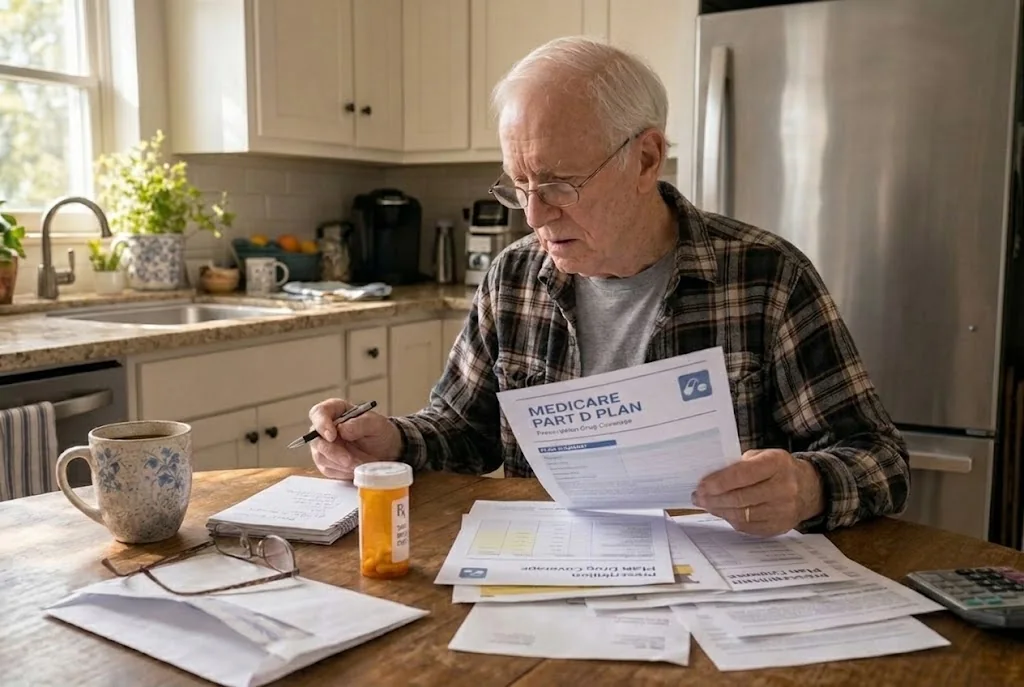

Could you get a GLP-1 medication for weight management through Medicare for $50 a month?
Possibly.
The Medicare GLP-1 Bridge gives eligible people access to certain weight-management medications for a $50 copay per 28- or 30-day supply.
But having Medicare Part D coverage or meeting a body mass index (BMI) threshold does not automatically qualify you.
Your eligibility depends on your Medicare plan, medical history, the reason for treatment, and the medication prescribed. For the first Bridge fill, your prescriber must submit a prior-authorization request.
The program began July 1, 2026, and is scheduled to end December 31, 2027.
This guide explains who may qualify, which medications are included, what you’ll pay, and how to get started.
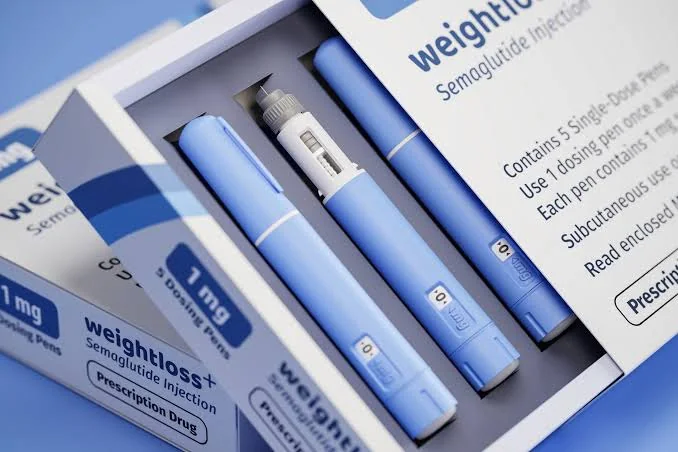
GLP-1 Weight Management Prescription Pens. Source: SmithRx
What Is the Medicare GLP-1 Bridge?
The Medicare GLP-1 Bridge is a temporary demonstration run by the Centers for Medicare & Medicaid Services (CMS).
It provides eligible people with Medicare Part D coverage access to certain GLP-1 medications when prescribed to reduce excess body weight and maintain weight reduction.
The Bridge operates outside the regular Medicare Part D coverage and payment process. It has its own system for processing prescriptions, claims, and prior authorizations.
The program includes a $50 copay for an eligible 28- or 30-day supply.
Who Qualifies for the Medicare GLP-1 Bridge?
To qualify, you must have an eligible Medicare drug plan, meet the clinical criteria, and use a covered medication for the program’s weight-management purpose.
Other restrictions may also affect your eligibility.
1. Your Medicare plan
The Bridge is available to people enrolled in an eligible Medicare Part D plan, including:
- A standalone Medicare Prescription Drug Plan (PDP).
- An eligible Medicare Advantage plan that includes prescription drug coverage (MA-PD).
- Certain Special Needs Plans (SNPs), employer or union group waiver plans, and the Limited Income Newly Eligible Transition (LI NET) program.
Not every Medicare coverage type qualifies. For example, CMS excludes Programs of All-Inclusive Care for the Elderly (PACE) and Private Fee-for-Service (PFFS) plans unless the member holds a separate eligible standalone PDP.
Because CMS’s listed plan-type criteria specifically reflect CY 2026 guidance and may be updated for 2027, confirm your individual plan’s eligibility at Medicare.gov or by calling 1-800-MEDICARE (1-800-633-4227) (TTY: 1-877-486-2048). .
2. Your prescription must be for weight management
The Bridge covers eligible GLP-1 medications prescribed to reduce excess body weight and maintain weight reduction alongside ongoing lifestyle changes, including structured nutrition and physical activity.
The reason for prescribing the medication matters.
Some GLP-1 prescriptions for other medical conditions must go through regular Part D coverage instead. The Bridge is not a replacement for Part D coverage of other eligible uses.
3. Your age and BMI
You must be at least 18 and meet one of the following clinical pathways when GLP-1 treatment begins.
| BMI when treatment began | Additional clinical requirement |
|---|---|
| 35 or higher | No additional qualifying condition is required. |
| 30 or higher | At least one of the following: heart failure with preserved ejection fraction (HFpEF), uncontrolled hypertension, or chronic kidney disease (CKD) stage 3a or higher. |
| 27 or higher | At least one of the following: prediabetes, a previous heart attack, a previous stroke, or symptomatic peripheral artery disease (PAD). |
For this program, CMS defines uncontrolled hypertension as systolic blood pressure above 140 mmHg or diastolic blood pressure above 90 mmHg despite concurrent treatment with two blood pressure medications.
CMS evaluates BMI at the time GLP-1 therapy began, not necessarily your BMI when the prior-authorization request is submitted.
If your BMI has decreased during treatment, you may still meet the relevant threshold based on your BMI when treatment started.
4. Other restrictions
Some medical conditions affect whether you can use the Bridge, even if you meet the BMI criteria.
CMS says people with the following conditions are not eligible for the Bridge:
- Type 2 diabetes.
- Moderate-to-severe obstructive sleep apnea (OSA).
- Noncirrhotic metabolic dysfunction-associated steatohepatitis (MASH) with moderate-to-advanced liver fibrosis.
These restrictions apply even if your Medicare Part D plan does not cover a GLP-1 medication for the condition.
Depending on the medication and indication, Part D may cover treatment for these conditions outside the Bridge.
CMS also restricts access to the Bridge for people who receive GLP-1 medications through their Medicare Part D plan.
If someone approved for the Bridge later fills a GLP-1 prescription through Part D, they become ineligible for further Bridge refills.
Because these rules can affect access, check the current CMS guidance if you have used a GLP-1 medication before or are receiving one through your Part D plan.
Meeting the clinical criteria alone does not guarantee approval. Your plan, treatment purpose, medication, and applicable program restrictions must also meet CMS requirements.
For the full criteria, see CMS’s provider guidance and Medicare.gov’s eligibility information.
Which Medications and Formulations Are Included?
The Bridge currently includes the following products when used for the program’s covered weight-management purpose:
- Foundayo® — tablet.
- Wegovy® — injection or tablet.
- Zepbound® — KwikPen® only.
The formulation also matters. The Bridge does not cover single-dose Zepbound vials or single-dose pens. Pen needles for Zepbound KwikPen are not covered by the Bridge and may need to be purchased separately.
Do not assume a medication is eligible simply because it belongs to the GLP-1 drug class or is prescribed for weight loss.
The specific product and formulation must be included in the program’s coverage rules.
CMS may update the covered-product list, so check the Medicare.gov coverage page before making decisions about a prescription or treatment plan.
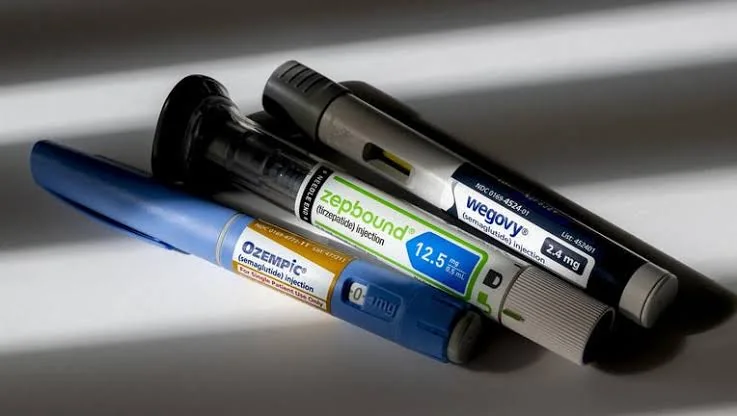
Covered GLP-1 Formulations and Brands. Source: LiveNOW from FOX
What Does the $50 Monthly Copay Cover?
If your prescription qualifies for the Bridge, you pay $50 for a 28- or 30-day supply of the covered medication.
That $50 copay applies only to the covered medication itself, it does not cover office visits, laboratory tests, or supplies such as pen needles, which are billed separately under your medical or pharmacy coverage.
In addition, CMS prohibits applying manufacturer copay cards, coupons, or discount programs to Bridge claims, so patients should budget for the full $50 copay per fill.
Because the Bridge operates outside the regular Part D benefit, some standard Part D cost rules do not apply:
- The Part D deductible does not apply to a Bridge prescription.
- The $50 copay does not count toward the beneficiary’s Part D out-of-pocket costs or deductible accumulators.
- The Bridge copay is not eligible for the Medicare Prescription Payment Plan.
- The program does not provide the Part D low-income subsidy for these Bridge prescriptions.
The $50 amount applies to eligible prescriptions dispensed through the Bridge.
Before paying, confirm that the pharmacy is processing your prescription through the Bridge rather than through your regular Part D plan.
For details, see CMS’s pharmacy guidance.
How Does the Prescription and Prior-Authorization Process Work?
Getting a prescription through the Bridge involves a few steps.
Step 1: Discuss eligibility with your prescriber.
Your healthcare provider can assess whether the medication is clinically appropriate and whether you may meet the Bridge criteria.
CMS recommends including an obesity diagnosis code and a note such as “SEND TO BRIDGE FOR WEIGHT MANAGEMENT” on the prescription to help route it correctly. These details are recommended, not required.
Step 2: Have the prescription sent to the pharmacy.
The pharmacy submits the claim to check your eligibility. For the first Bridge fill, the medication cannot be dispensed until the prior-authorization request is approved.
Step 3: The pharmacy sends the prior-authorization request to your prescriber.
The pharmacy uses its existing process, such as an electronic system or fax, to send the request.
The pharmacy should process the claim before the prior-authorization request is submitted. Sending the request too early can lead to a “patient not found” error.
Step 4: Your prescriber completes the request.
The prescriber supplies the required clinical information and attests to the applicable criteria. The information must be accurate and complete, and CMS may check it against Medicare data.
Step 5: Wait for the decision.
CMS guidance provides for a prior-authorization decision within 72 hours of submission. Follow the instructions in the CMS provider guidance if there is a delay or the request needs to be submitted directly.
Step 6: The pharmacy dispenses the medication if approved.
The pharmacy collects your $50 copay for the covered supply.
After the first approval, subsequent fills generally do not require a new prior authorization unless you switch to a different covered GLP-1 medication.
The Bridge covers 28- or 30-day supplies, not 60- or 90-day fills.
A Part D denial is not required before a potentially eligible prescription can be routed to the Bridge.
CMS does not provide a formal appeals process for the Bridge. If a request is not approved, your prescriber may be able to resubmit it with corrected, additional, or updated information.
For the form and full process, see the CMS prior-authorization form.
When Should a Prescription Go Through Part D Instead?
The Bridge is not the right route for every GLP-1 prescription.
Regular Part D coverage may apply when the medication is prescribed for an indication covered under the Part D benefit.
For example, CMS identifies type 2 diabetes, moderate-to-severe obstructive sleep apnea, and certain cases of noncirrhotic MASH with moderate-to-advanced fibrosis as conditions that make a person ineligible for the Bridge.
The reason for prescribing the medication also matters.
If a GLP-1 is prescribed to reduce the risk of a major adverse cardiovascular event, the prescription should go through the person’s regular Part D plan even if weight loss is also a treatment goal.
Coverage depends on the medication, the condition being treated, and the applicable Medicare rules. A diagnosis alone does not guarantee that a particular drug will be covered.
If you are unsure which route applies, ask your prescriber or Part D plan to confirm the appropriate coverage pathway.
How Pharmacists Can Help With Access and Medication Use
Getting access to a medication is only one part of treatment.
You may also have questions about how to use it, possible side effects, or how it fits with your other prescriptions.
Pharmacists can help with several practical aspects of GLP-1 treatment:
- Prescription and refill questions:
Clarifying which product and formulation were prescribed and helping identify issues that need follow-up with the pharmacy or prescriber.
- Medication safety:
Reviewing your medication history, identifying potential interactions or duplication, and explaining how to use the prescribed formulation.
- Ongoing treatment:
Discussing side effects, refill timing, and medication-related concerns that arise as your treatment changes.
When to get immediate help: While mild gastrointestinal side effects can occur during GLP-1 treatment, patients should review product-specific FDA labeling and seek prompt care for serious warning signs.
For example, FDA prescribing information for Wegovy® instructs patients who develop persistent, severe abdominal pain (with or without vomiting, a potential sign of pancreatitis) to stop taking the medication and call their healthcare provider right away, and to get immediate emergency medical help for signs of a serious allergic reaction (such as swelling of the face, lips, tongue, or throat, or trouble breathing).
Always consult your prescriber before restarting or changing any therapy.
Your prescriber remains responsible for the required clinical attestations, while the pharmacy processes the claim and helps move any prior-authorization request through the dispensing process.
The specific support available from a pharmacist will depend on the care setting and service.
For more on how pharmacist care managers can help people manage GLP-1 medications alongside other prescriptions and health conditions, read PharmD Live’s “Beyond the Prescription: Virtual Pharmacists Analyze Weight Loss Drugs.”
What Happens When the Bridge Ends in 2027?
The Medicare GLP-1 Bridge is scheduled to end on December 31, 2027.
What happens afterward remains uncertain, so do not assume the $50 copay or current eligibility rules will continue beyond that date.
CMS has extended the program to collect additional information about GLP-1 use and share utilization data with Part D plans ahead of possible future implementation of the BALANCE Model.
CMS has confirmed that BALANCE will not launch in Medicare Part D in 2027.
That does not mean the model has been canceled altogether, and CMS has not confirmed a permanent replacement for the Bridge.
As the end date approaches, ask your prescriber and Part D plan what options may be available afterward.
The Bottom Line
The Medicare GLP-1 Bridge may make certain weight-management medications more affordable, but access is not automatic.
Your Medicare plan, clinical eligibility, treatment purpose, medication formulation, and prior-authorization requirements all matter.
Start by checking the official Medicare coverage information. If you may qualify, talk with your prescriber about the next step and ask your pharmacy how the prescription will be processed.
References
Centers for Medicare & Medicaid Services. (2026, August 6). Information for providers.
Centers for Medicare & Medicaid Services. (2026, August 17). Information for pharmacies.
Centers for Medicare & Medicaid Services. (2026, September 29). BALANCE (Better Approaches to Lifestyle and Nutrition for Comprehensive hEalth) Model.
Centers for Medicare & Medicaid Services. Medicare GLP-1 Bridge. Retrieved October 18, 2026.
Centers for Medicare & Medicaid Services. (2026, August 6). Medicare GLP-1 Bridge: Information for Providers. CMS.gov.
Centers for Medicare & Medicaid Services. (2026, August 17). Medicare GLP-1 Bridge: Information for Pharmacies. CMS.gov.
U.S. Food and Drug Administration (FDA). WEGOVY® (semaglutide) Prescribing Information. FDA.gov.
Medicare. Weight loss drugs. Retrieved October 18, 2026.